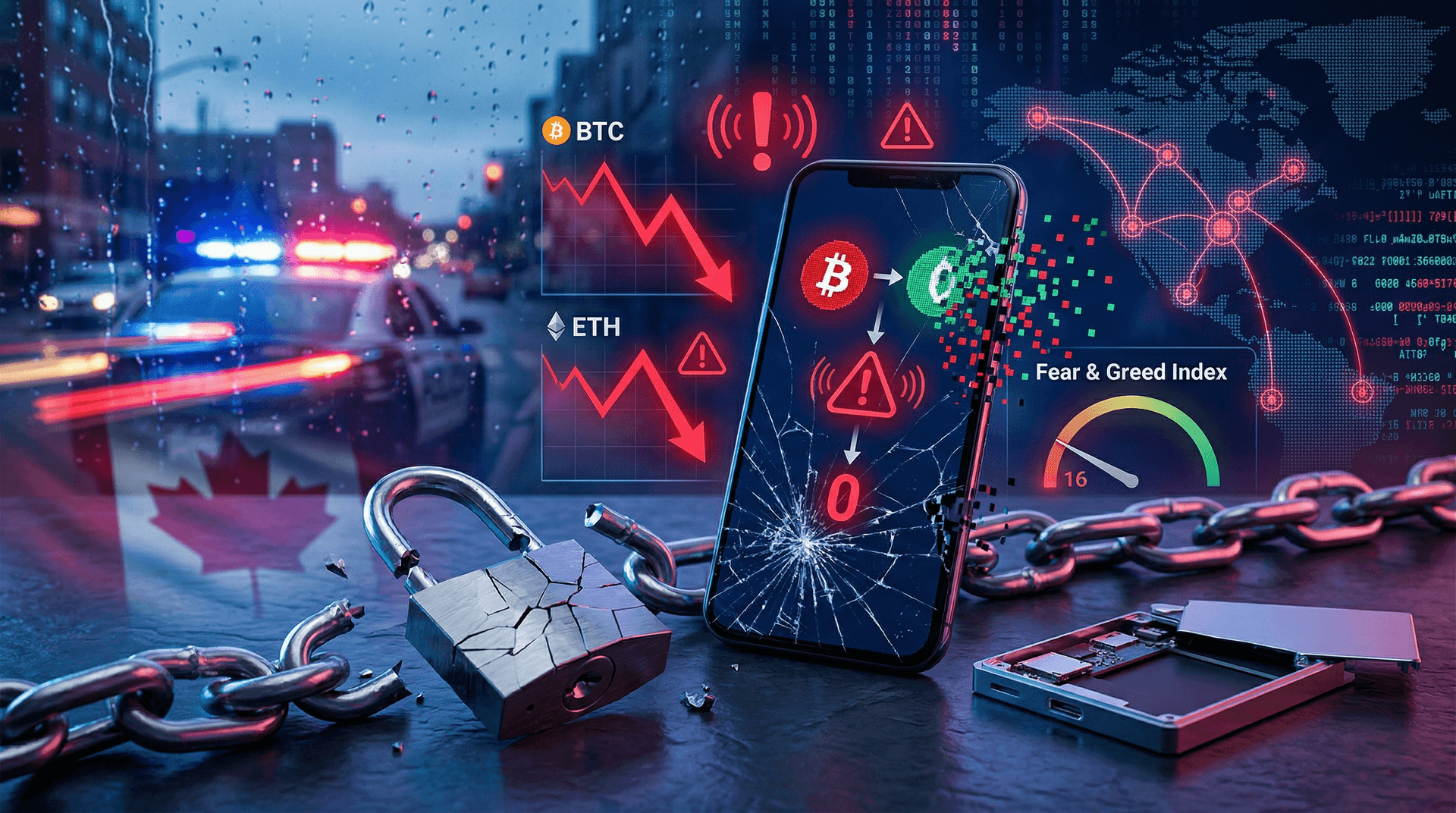
A British Columbia resident lost $11,900 CAD to a cryptocurrency scam on April 12, 2026. Police warn of surging attacks amid plunging crypto markets exploiting investor fears. The case exposes fintech transaction risks in volatile conditions.
Scammers posed as elite traders on X (formerly Twitter). They dangled 300% Ethereum returns. The victim transferred funds to a fraudulent wallet that emptied instantly.
Cryptocurrency Scam Tactics Exploit Desperate Traders
Scammers flooded X with fake profit screenshots and deepfake videos of influencers endorsing schemes. Victims sent Bitcoin to untraceable wallet addresses, losing funds forever.
British Columbia's RCMP logged 45 cryptocurrency scams this month alone, per their April 12, 2026, data. Scammers stole $2.1 million CAD total. Police recovered zero assets from these cases.
Fintech apps speed bank-to-exchange transfers, enabling thieves to drain accounts during market panics. Instant settlements amplify the damage from these blockchain frauds.
Crypto Market Plunge Ignites Scam Wave
Bitcoin crashed to $71,187 USD on April 12, 2026, down 3.4%. Ethereum sank to $2,202.70 USD, dropping 5.0%. Alternative.me's Fear & Greed Index hit 16, extreme fear territory.
XRP traded at $1.33 USD (down 2.7%). BNB fell to $592.84 USD (off 3.3%). USDT stayed stable at $1.00 USD amid the chaos.
Chainalysis reported a 28% jump in crypto scams during Q1 2026. Global losses topped $3.2 billion USD, with North America hit hardest at 35% of incidents.
Fraudsters peddle fake "recovery services" in panic sells. They demand upfront fees, then vanish with more victim funds.
Police Push Fintech Warnings and Blockchain Upgrades
B.C. police demand advanced blockchain verification from exchanges. Authorities insist platforms flag suspicious wallets in real time. Existing KYC (Know Your Customer) protocols fall short against pro scammers.
RCMP urges hardware wallets like Ledger Nano X. These offline devices secure private keys against remote hacks and phishing.
Canadian Securities Administrators noted 150% scam growth since 2025, per their April 12, 2026, update. Weak user education drives the surge.
Regulators pilot multi-signature approvals for big transfers. Coinbase tests dual-key requirements to boost cybersecurity protections on high-value deals.
Cybersecurity Protections Tackle Blockchain Weak Spots
Blockchain transparency helps track stolen funds. But pseudonymous addresses hide scammers. Chainabuse scans tainted wallets around the clock.
Crypto mixers like Tornado Cash clones launder proceeds. The U.S. Treasury sanctioned originals in 2025.
Elliptic's AI flags 92% of scam wallets, their April 2026 report states. Fintech apps such as Trust Wallet need these stronger safeguards integrated.
Fintech innovators deploy AI-driven anomaly detection. Platforms like Kraken now use machine learning to block 85% of suspicious logins before they occur, per company data.
Action Steps Shield Your Crypto Assets
Activate two-factor authentication (2FA) on every account. Skip phishing DMs on X—verify URLs manually every time.
Use biometric locks for transactions over $1,000 CAD. Shift some holdings to stablecoins like USDT, which surged 12% in volume today.
Report scams to Canada's Anti-Fraud Centre right away. Crypto.com hosts police-partnered webinars today on spotting red flags.
Regulators eye scam insurance products. Gemini provides up to $100,000 USD coverage per incident for 0.5% annual premiums.
Global Crypto Scam Surge Pounds North America
Europol tracked 1,200 crypto scams in Europe this quarter. Losses hit €450 million.
Interpol nabbed 18 scammers last week via blockchain forensics. Fintech executives meet in Vancouver tomorrow to hash out AI fraud defenses.
Analysts predict Bitcoin rebounds to $75,000 USD by April 20. B.C.'s Crypto Relief Fund collected $50,000 CAD for victims today.
Police stress immediate vigilance. Upgrade wallets now to fight cryptocurrency scams in this fear-charged crypto market.