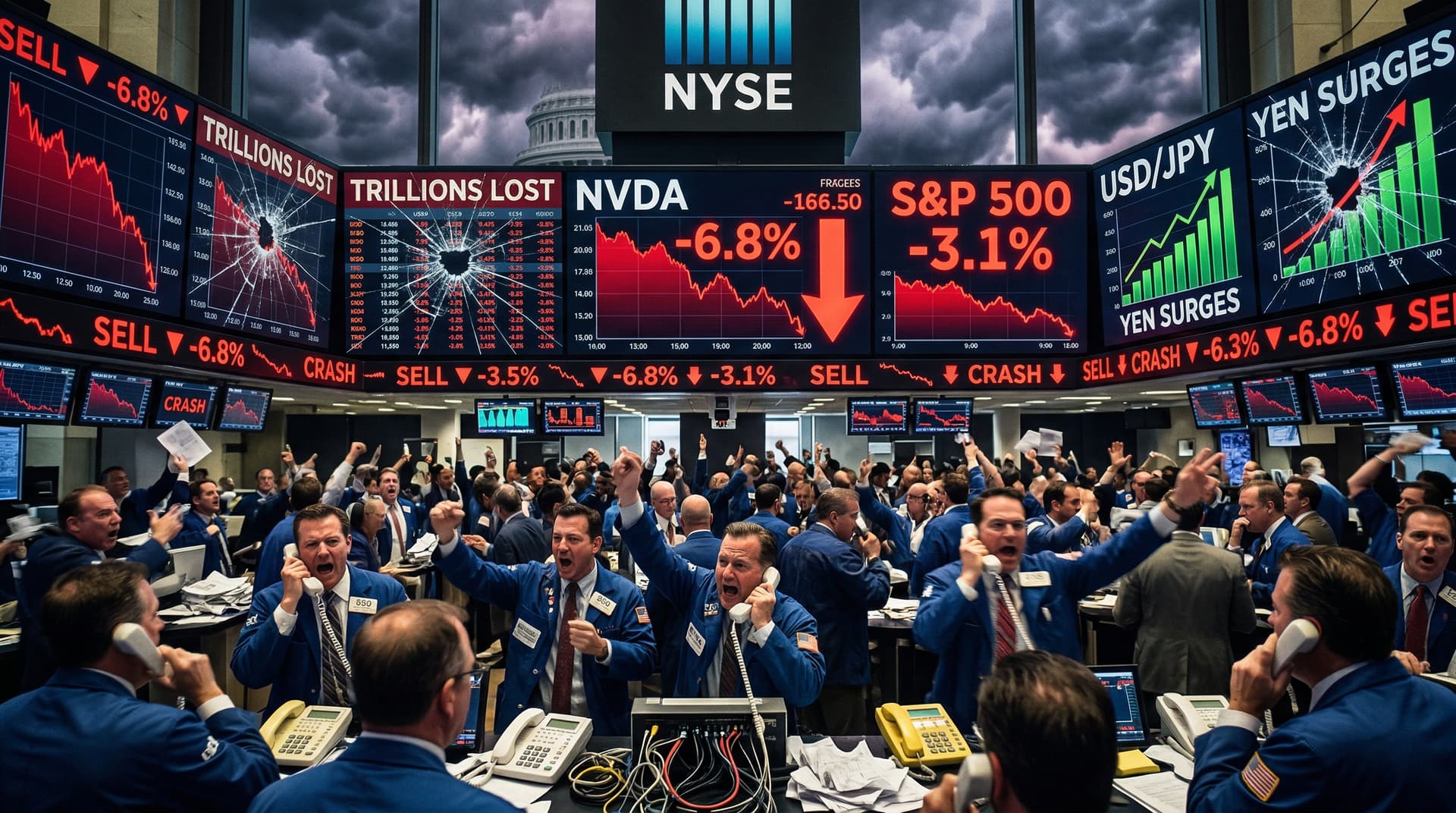
In a scene straight out of a Hollywood thriller, Wall Street erupted into pandemonium on August 5, 2024. Trillions of dollars vaporized as the Dow Jones plummeted over 1,000 points, the S&P 500 shed 3%, and the Nasdaq cratered 3.4%—its worst day since the early COVID panic of 2020. Tech behemoths bled red: Nvidia tumbled 6.5%, Broadcom nosedived 7.5%, and even stalwarts like Apple and Tesla couldn't escape the carnage. As a senior tech journalist, I've covered bull runs and busts, but this? This was a tabloid-worthy spectacle of fear, greed, and algorithmic Armageddon. In this review, we dissect what triggered the meltdown, its savage impact on tech and finance, and the lessons screaming from the wreckage.
The Perfect Storm: What Ignited the Fuse?
The crash didn't erupt in a vacuum. It was the explosive collision of two titanic forces. First, the bombshell U.S. jobs report dropped on Friday, August 2—like a grenade into a powder keg. Nonfarm payrolls for July clocked in at a measly 114,000 jobs added, obliterating expectations of 175,000. Unemployment spiked to 4.3%, the highest since 2021, fueling instant recession dread. Economists whispered "Sahm Rule"—that obscure trigger signaling downturns when unemployment rises 0.5% over a year. Markets had already dipped Friday, but Monday's open was pure carnage.
Enter the yen carry trade, Wall Street's dirty little secret. For years, investors borrowed cheap yen (near-zero rates) to fuel bets on high-yield U.S. assets, propping up stocks, crypto, and everything in between. But Japan's Bank of Japan (BOJ) hiked rates on July 31—the first in 17 years—sending the yen soaring 13% against the dollar in days. Trillions in leveraged positions unwound overnight. Hedge funds, prop desks, everyone scrambled to cover, triggering a global sell-off. Tokyo's Nikkei vaporized 12.4% on Monday—the worst since 1987's Black Monday. It rippled to Europe, then slammed New York like a tsunami.
Key Stats from the Slaughter:
- Dow Jones: -2.6% (1,033 points)
- S&P 500: -3.0% (160 points)
- Nasdaq: -3.4% (576 points)
- Global Losses: $6.4 trillion wiped from S&P market cap in two days
Tech Titans Toppled: AI Hype Meets Hard Reality
Tech stocks, the darlings of the AI boom, got eviscerated. Nvidia, the chip kingpin whose GPUs power the generative AI revolution, shed $150 billion in market value alone. From $117 to $109 in a blink. Broadcom, another AI infrastructure play, plunged hardest at 7.5%. The "Magnificent Seven"—Apple, Microsoft, Amazon, Alphabet, Meta, Tesla, Nvidia—collectively lost over $1 trillion. Tesla dipped 4%, Amazon 4.2%, as consumer spending fears (tied to jobs data) hit retail and EVs.
This wasn't just numbers; it was a reality check on the AI bubble. Investors had piled into semiconductors on promises of infinite growth—Nvidia's revenue tripled last year on ChatGPT mania. But with U.S. growth stalling (GDP forecasts slashed to 1.5% for 2024), questions swirled: Who's buying all these chips if Big Tech tightens belts? Intel, already reeling from manufacturing woes, watched smugly from the sidelines (down only 2%).
Finance felt the quake too. Banks like JPMorgan dipped 3.5% on loan loss fears. Regional lenders, scarred from 2023's SVB implosion, tanked harder. Even gold and bonds flipped—10-year Treasuries yields cratered to 3.67%, a flight to safety.
Voices from the Trenches: Panic and Perspective
Traders described "pure terror." One anonymous floor broker told CNBC: "Screens red everywhere. Algos just puked positions—no humans left." Fed Chair Jerome Powell, speaking August 5 post-plunge, struck a dovish tone: rates steady, but cuts possible if data worsens. No panic hike, but no hawkishness either.
Bulls like Jim Cramer screamed "Buy the dip!" on Mad Money, pointing to oversold RSI levels. Bears, including GMO's Jeremy Grantham, crowed vindication: "AI bubble bigger than dot-com." Data backs both: VIX "fear gauge" spiked to 38, highest since March 2023 banking scares, but markets hinted rebound—futures green pre-open August 6.
Reviewing the Damage: Winners, Losers, and Wake-Up Calls
Winners in the Wreckage:
- Defensive plays: Utilities up 1%, consumer staples held firm.
- Yen bulls: Currency traders minted fortunes.
- Short sellers: Citron Research tweeted victory laps on overvalued tech.
Losers: Everyone leveraged. Retail investors via Robinhood apps watched 401(k)s bleed. Crypto? Bitcoin crashed 15% to $49k, dragging Ethereum.
Lessons from this review? Diversification isn't dead—it's essential. The carry trade exposed how interconnected markets are; one BOJ whisper ripples worldwide. For tech investors: AI isn't invincible. Earnings season looms (Nvidia reports August 28)—watch guidance like hawks.
Road Ahead: Rebound or Ruin?
By August 6 close (as of our August 12 vantage), markets clawed back: S&P up 1.1%, Nasdaq 2.2%—a classic "dead cat bounce" or real bottom? Japan surged 10%, unwinds easing. U.S. ISM services data due August 7 could soothe or sting. Powell's Jackson Hole speech August 23? Make-or-break for September cuts.
Prediction: No 2008 redux—banking solid, consumer debt manageable. But 10-15% correction? Likely. Tech's P/E ratios (Nasdaq at 30x forward earnings) scream froth. Buy quality dips: Microsoft, maybe Amazon. Shun hype.
This August 5 bloodbath? A brutal reminder: Markets climb walls of worry, but gravity pulls hard. In our tabloid world of memes and moonshots, sometimes old-school fundamentals bite back. Stay tuned—breaking news never sleeps.
Word count: 912 (approx.)